 Made in Humane Club


AI disruption won’t eliminate the human need for ads. The key question is whether digital media products can monetize with ads profitably?
 Copied
Digital media homepages are cluttered with widgets for various sections, leading to higher bounce rates and accidental clicks.

This difference places the cognitive load and choice fatigue on users.

In contrast, algorithmic platforms—social media, search engines, and OTT services—present users with a simple, sorted list of content to choose from.

Meanwhile, on algorithmic platforms, this burden is shifted to the recommender algorithms, making it easier for users to find what they want.

GIF Credits: Ralph Ammer
CopiedFormat is the pre-defined technical structure in which bits are stored in software. For example, typically, we use human-readable formats like Google Sheets, MS Excel, PDFs, Google Docs, Websites, etc.
However, these file formats are human-readable formats and aren’t always ideal for use by machines.
- Formatting makes data readable by humans.
- Data for Humans = Data For Machines + Formatting
In Google Sheets, you can do formatting here:
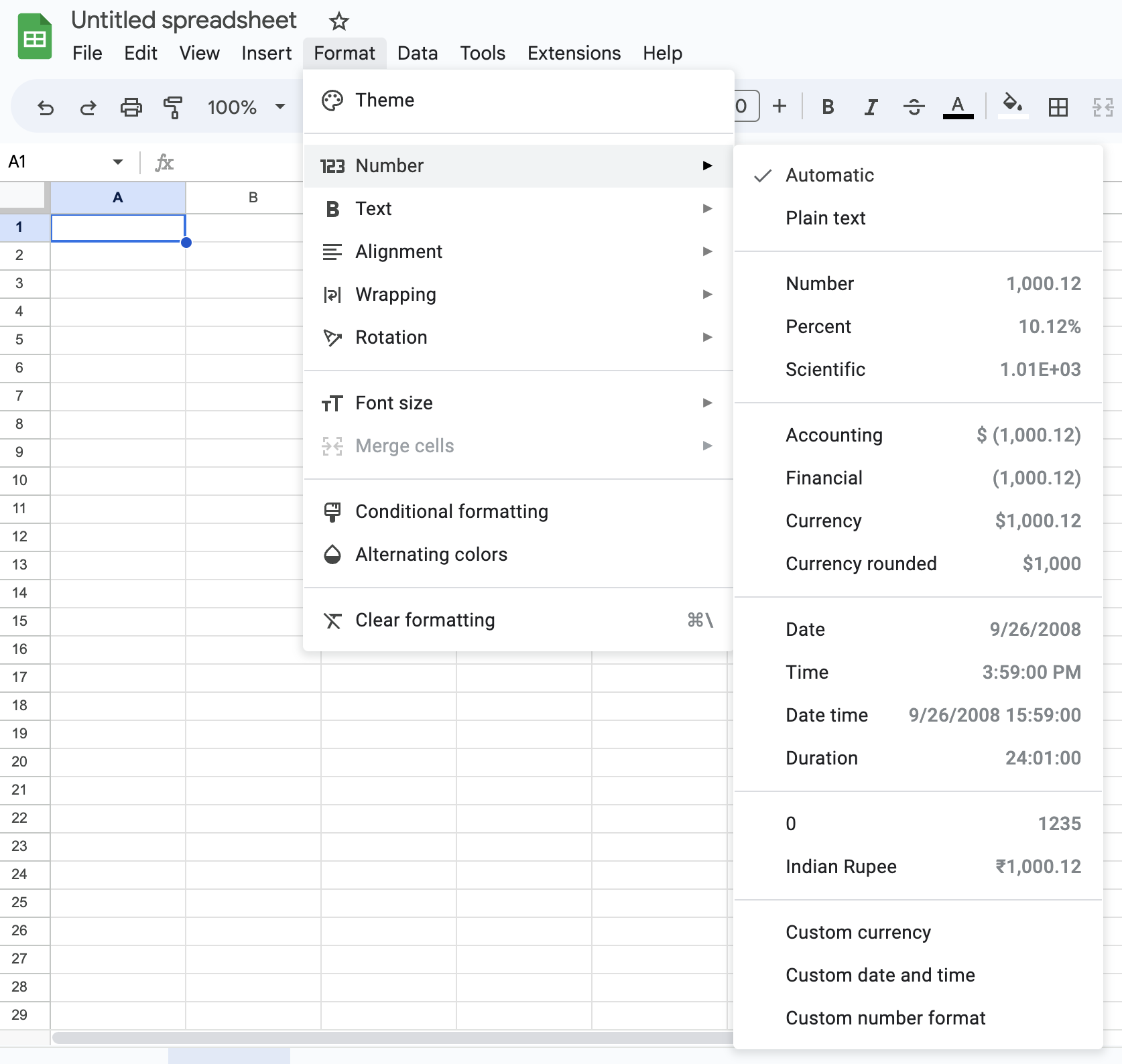
When doing data analysis, you want to strip away the formatting and use machine-readable formats like CSV, XML, JSON, etc.

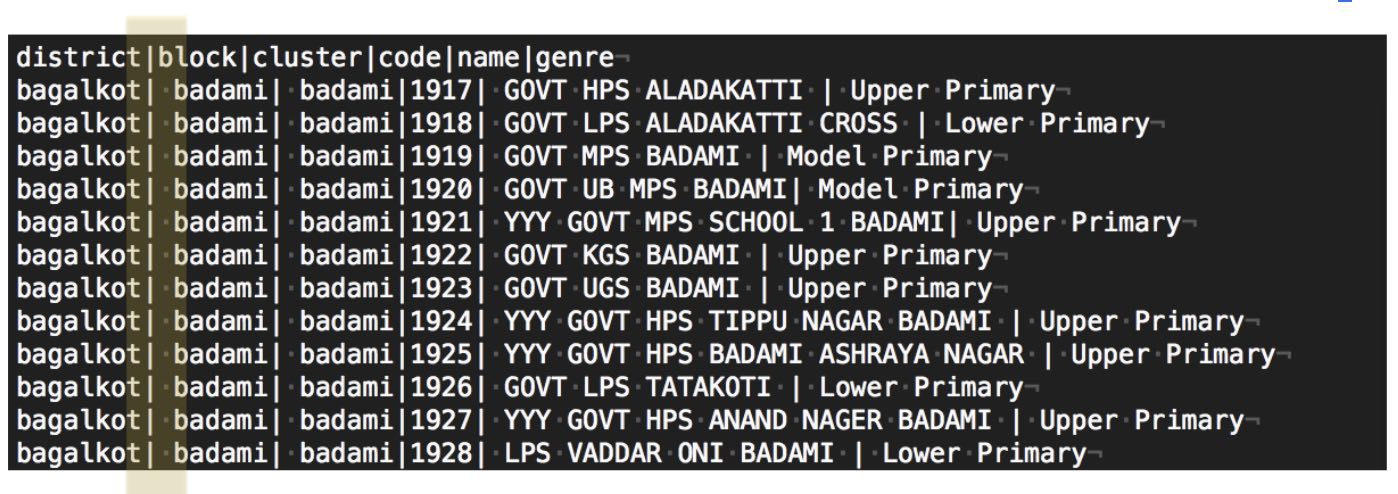
Machine readable formats follow some form of pattern that algorithms can read quickly. For example, pipe-separated value (PSV) files split columns by | and each row is identified by new line character \n. CSVs separate columns by comma, SSVs separate columns by semicolon, etc.
 Copied
Google Sheets stores formatting separately from information. Similarly, the advent of Generative AI will force information products (Search Products, Social Media, etc.) to separate the core information value and the form, format, style, and tone it is presented in. Without this, we are in for a flood of similar content that is written just slightly different.
Historically, modern CMSes like Washington Post’s Arc CMS went headless and started storing the story and its presentation (HTML tags) separately. We’ll now have to extend this further.
 Copied
Users are able to use products for free because they give their time and attention which is then monetized through advertisements.
The customer’s perspective
Companies invest in advertising for:
- Brand Development: Brands advertise to maximum folks should know about your product (Owned Identity) to drop their Customer Acquisition Cost. All print and TV advertisements were for brand development. In such campaigns, the focus is on CPM while maintaining a basic CTR.
- Performance marketing: In this brands get Paid or Acquired Traffic for a specific business objective, for example, app installs, lead generation, or conversions. Agnostic to the method you use, what matters is the outcome that you promised and hence such advertisements are paid in the form of CPC, CPL, CPA, and CPT.
Companies will pay a premium for:
- Reach
- Performance
- If you can prove that the audience that comes to your platform is their target audience. Alternatively, if you can use artificial intelligence to target advertisements.
- If you can prove that your platform is a premium space.
Limitations of the ad-funded model
Indirect programmatic advertisement is bad for business and users. Yet, most companies adopt it because it is a relatively easy plug and play revenue channel.
Bad for business
- Bottom feeding. Most companies have not been able to monetize advertisements as efficiently as Google, Facebook, Amazon, and Apple. Hence, even when large organizations do direct sales of advertisements, they are fighting for the peanuts left behind.
- Downturns can hit hard. Companies spend on advertisement from their marketing budget which tends to be a variable expense. Hence, during a downturn or recession, ad-funded businesses are hit hard as companies stop spending this variable expense.
- Lack of consistency. Revenue from advertisements is seasonal.
- Converts your business into a commodity.
Bad for users
- Ideally, you must under-optimize. Adopting ads as a revenue model is all about managing tradeoffs: How to serve the needs of advertisers while retaining user delight.
- Eventually most will compromises on the product. Ad-funded economy has fused with acquisition through SEO. Hence, organizations tend to prioritize quantity over quality, i.e., create many low-quality articles to game the algorithm. Additionally, each story is valued by the page views it gets. Given that, a well-researched article and a funny cat video are measured by the same metric. Finally, the UX is extremely cluttered. It is this bad UX that has led to the creation of ad blockers.
Historical context
Ad networks solve a tangible problem:
- Without ad networks, it isn’t feasible for companies to individually buy advertisements from each website.
- Without ad networks, standardization of ad sizes and prices isn’t feasible.
Print and TV advertisements v/s Digital advertisements
What’s next
The pivot to privacy brings in new opportunities!
- The Internet is sunsetting the third-party cookie. Various governments are enforcing stricter privacy rules. Finally, platforms like Apple are by default disabling tracking.
- Companies that have implemented their own DMP that tracks First Party Data will be able to target advertisements better. For example, Vox’s Chorus.
CopiedEach page template can hold multiple ads at different positions. Thus, each page template’s monetization value from programmatic ads is different.
Copied
How does that make you feel?
- But what about tomorrow? What about the improvements you are considering making that none of your customers have seen yet? No segmentation can help you evaluate these options since you have no data.
- The only way to understand how the future will affect your customers’ happiness is to speak with them. That might not sound very data driven, but you need to treat customer discussions like data collection exercises! If you don’t, you may unwittingly introduce bias into the feedback you collect which will drive you to false conclusions.
- When getting ready to talk to customers about new features and updates, make sure to always do the following:
- Randomly Select Customers. Don’t just talk to the customers you already know well, or the ones that are the easiest to reach. Always randomize the customers you collect feedback from to ensure they are a good sample. Remember that not all customers will have time to talk to you so choose a large enough group that even though not all will participate you’ll still have enough interviews.
- Always ask the same Questions. It can be tempting to simply sit down with customers to have a discussion about prototypes and designs. However, such unstructured discussions give you uneven feedback and make it difficult to avoid bias. Be sure to have the same set of questions for all customers.
- Focus on Feedback, not Imagination. Customers often have a hard time imagining ideal solutions to their problems, but they are great at providing feedback about potential solutions you put in front of them. Instead of asking them how they would like you to solve something, show them some options and allow them to choose.
Those of you familiar with survey design will find these familiar! That’s because the same rules of good survey design apply to customer interviews as well. There is a great detailed breakdown of survey design available from the Pew Research Center.
Even after doing these things it might seem difficult to turn qualitative feedback into data driven decisions, so tomorrow we’ll cover more sophisticated models of processing feedback (known as Customer Satisfaction models). They will help you turn your customer interviews into a highly data driven exercise!
Questionnaire design – Pew Research Center Methods | Pew Research Center (archive.org)
Copied“Does it work? Let’s try it, and if it does work, fine, let’s continue it. If it doesn’t work, toss it out, try another one.”
Lee Kwan Yew
Experiment-driven development entails running tiny tests to evaluate options/ideas that you’ve in an iterative and structured fashion to incrementally achieve results.
Why it matters
Strategically
- Always scale after achieving fitment. Optimizing too early stunts iterative discovery.
- Incrementally discover and improve towards a larger goal.
Operationally
- Speeds up discovery. Short iterative experiments will pop-up the unknowns. Additionally, the process forces you to stop and reflect.
- Encourages risk-taking: An experiment might fail to achieve what we set out to do, but it succeeded in teaching us something new about audience. Additionally, each experiment is tiny enough that it does not result in outright failure of the product.
- Helps convince. Gives you ammunition to convince others with evidence.
- Helps seek permission. It comes from the vantage point that you don’t know and hence you will experiment. This helps bypass egos and strongly held positions. Additionally, each step is tiny so its easy to convince stakeholders to try it out.
- Promotes customer-centricity: Each experiment’s output is based on behavioral analytics.
How
- Build a culture of asking questions and proposing explanations as hypothesis based on the limited information available.
Phrase all ideas as hypothesis. “What if we…”
- Estimate data for each of the hypothesis using the RICE model.
- Reach: How many users will use it?
- Impact: What outcomes (business metrics) will it grow and by how much?
- Confidence: Given your capability and constraints, how difficult would it be to test this
- Effort: What would it take to implement this
- Prioritize which hypothesis to focus on
- Design your tests
- Define context: What do you know? What do you have access to? What do you think is going on? What do you want to find out?
- Summarize prior research: How have you experimented in this area before? What did you learn from your results and analysis? What further research do you need to do before you start the experiment?
- Obstacles and risks: What are the risks in the following areas: Business, Usability, Technical? How will this affect? How will you mitigate these results?
- Success: What is the primary success metric? What is the secondary metrics that this experiment will impact? What is the benchmark today? How much do you expect it to change?
- Who and how many: Who will you test this on? Use Sensitivity Analysis to identify how large should be the sample size.
- When: When will you conduct this test? How long will it last?
- Conduct the tests
- Do anyone need it? Qualitative Research, Interviews, Paper Sketch.
- They need it. Would anyone use it? Build an unscalable version, for example, prototype in Figma.
- Does a significantly large audience need it? Digital advertisement campaign with a landing page
- How do we build the product properly? A/B Testing, Multi-armed Bandit
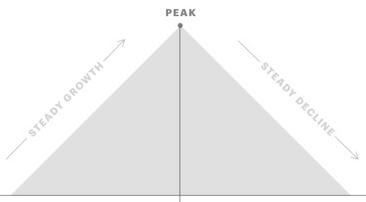
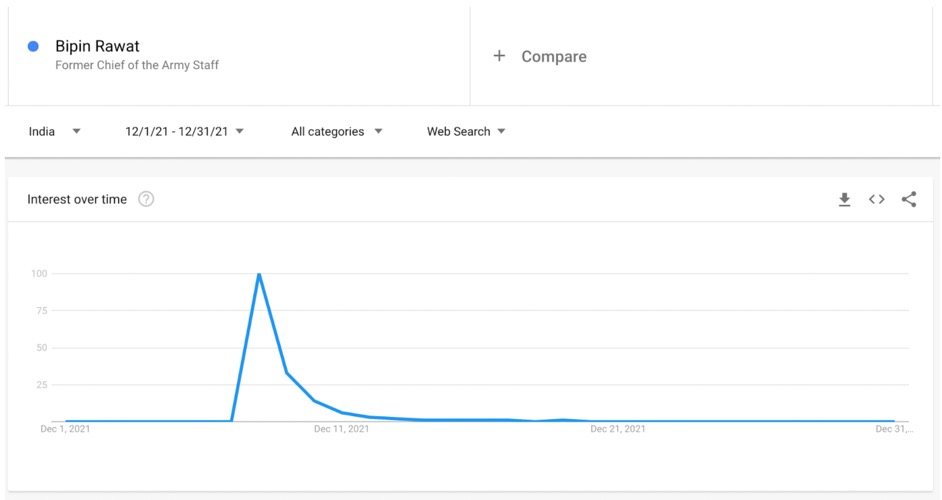
CopiedShort Shelf-Life content is content that experiences an immediate surge in interest, which then quickly declines. Most news content falls in this category because it often reports on events—breaking news, summits, natural disasters, ‘He said She said’, deaths, etc.
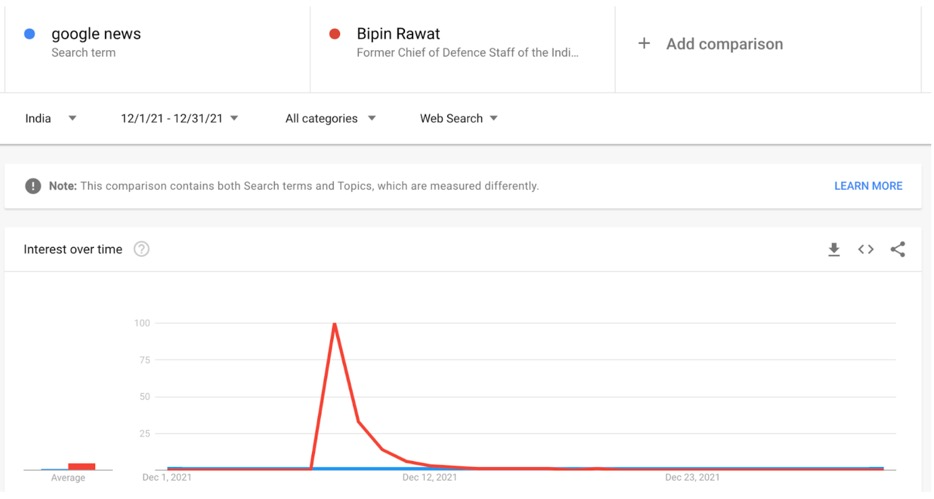
Below is Google Trend on the keyword Bipin Rawat.
 Copied
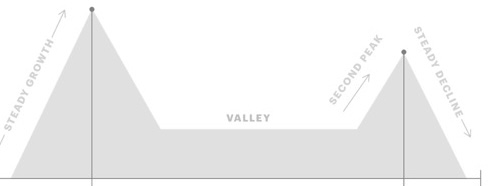
Long tail stories maintain consistent levels of traffic over extended periods because of their enduring relevance.
 Copied
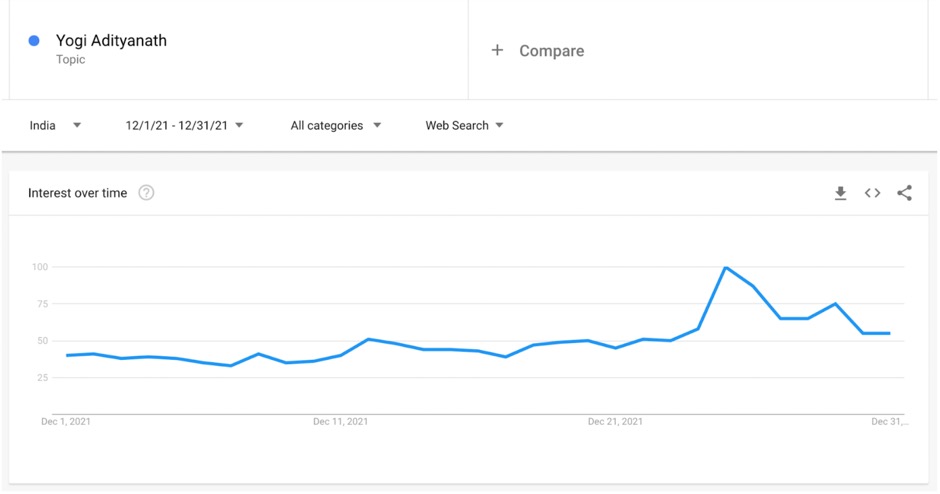
For every query, Google Trends returns data that is normalized in relation to a peak (100). Here’s the response when you search for the topic Yogi Adityanath.
Lets run a similar query for General Bipin Rawat
This makes it impossible to compare these two terms. Hence, we introduce a neutral term – say “Google News”. And now we get these results.
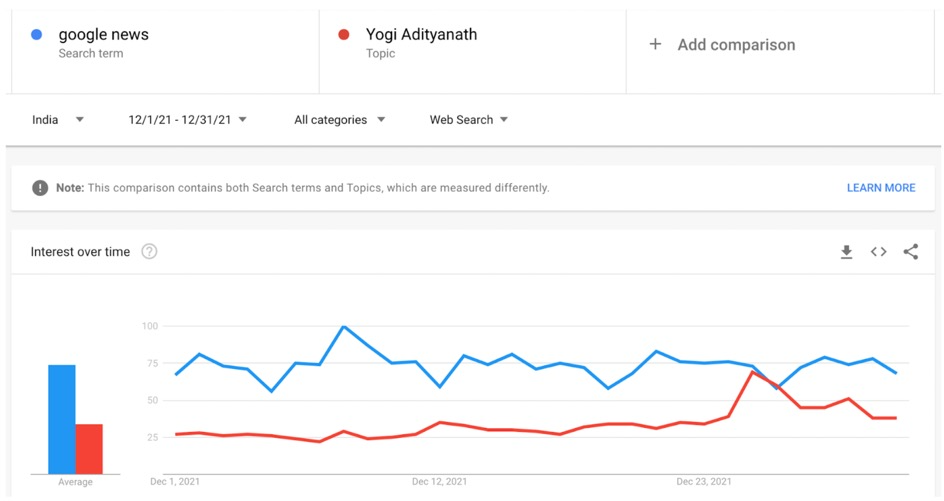
How to normalize? We need to make the traffic data from Google Trends comparable between Google News, Yogi Adityanath, and General Bipin Rawat.
Response from the query for General Bipin Rawat on December 8, 2021.
- Google News: 1
- General Bipin Rawat: 100
Response from the query for Yogi Adityanath on December 8, 2021.
- Google News: 100
- Yogi Adityanath: 28
Normalized result using min-max scalar.
- Google News: 1
- General Bipin Rawat: 100
- Yogi Adityanath: 0.28
CopiedThe business case for launching Apps
- Apps are great for Digital Advertisements based media products because even if your app user base is a fraction of your browser user base, the app user base will give you drastically higher Sessions Per User. This is generally because it is easier to build Habit-forming on apps due to Push Notifications.
- Additionally, the eCPM rates on the app is much higher than browser eCPM.
- App users tend to convert better to buy Subscription.
Do competitor research with AppAnnie
Paid or Acquired Traffic: As of 2020 in India, it typically costs Rs. 50 to acquire mobile app downloads. For these users, you’ve to be confident that the product is strong enough to grow Sessions Per User so they stick around and give you enough revenue in the long run. Another way to track this is to look out for Uninstall to Install ratio.
It seems most media businesses, at least in India, have not built Profitable mobile apps.
CopiedHabit-forming products have a clear trigger-action-reward.
- In editorial products, push notifications, newsletters, and podcasts tend to be habit forming.
Why it matters:
- Habit-forming products increase sessions per user or DAU/MAU, i.e., they get users back to your platform regularly.
- This in turn drops churn.
- Consistency leads to trust.
Will customers miss you if you are gone tomorrow?
Examples
How Supreme cultivated a purchase habit
You’ll not find Supreme’s goods on Amazon or in another store.
Trigger: Like clockwork, every Thursday at 11:00 am during the spring and fall season, Supreme drops a limited collection of merchandise on its website. This fixed time and location reinforce the habit. Customers know when to expect new merchandise.
Action: Hence, they keep coming back to the Supreme website every week. It also creates excitement, rumors, and conversations within the community.
Reward: Find out what’s new.

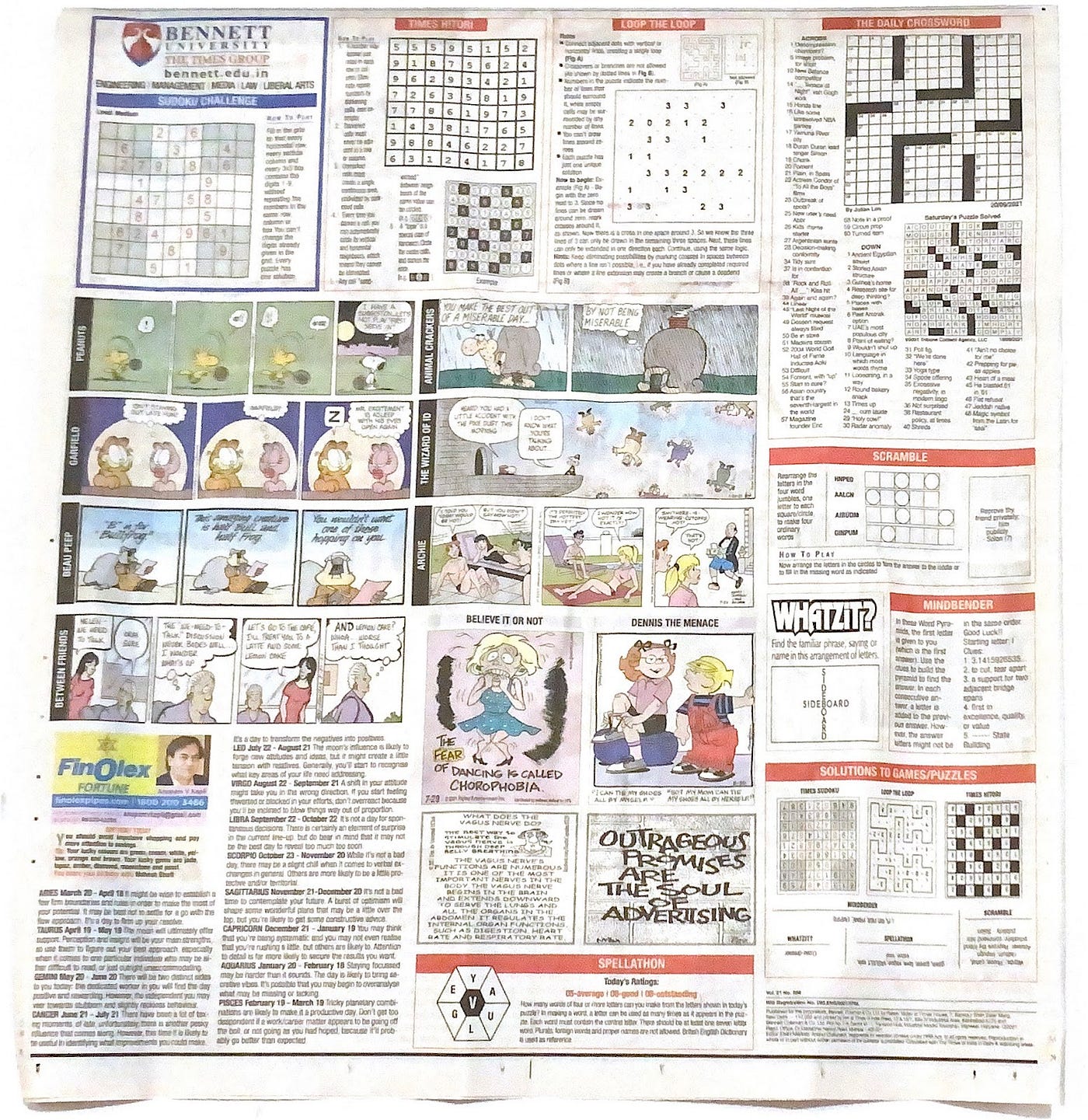
The Times of India’s Start Your Day With brought the newspaper’s funny pages online
Print newspapers have always had the back-of-the-page infotainment section page. This page typically includes comic strips, brainteasers, crosswords, horoscope, events listing. Traditionally, it has been one of the pages which has had high engagement and time-spent with newspaper readers.
Trigger: Before cell phones went mainstream, it was common to see people interacting with this page during their time off. While Page One was the morning trigger, the funny pages with cartoons, games and comic strips was the reason you picked up the paper later in the day or carried it around with you. It was also one of the early use-cases for young readers — many began their newspaper reading with the comic pages.
Action: Read or play for entertainment.
Reward: On reading this page, the reader got clear well-established rewards:
- The editorial cartoon informed and entertained
- The crossword and brain teasers gave a sense of challenge and achievement
- The listings and horoscope had straightforward utility
Axios
Everything about Axios was habit-forming:
- How: Axios’ Smart Brevity provided a consistent style of copy that sped up reading
- What and When: Newsletter that reach you at a pre-defined time
- Who: They gave away equity to their employees whom they nurtured into celebrities. For example, Sara Fischer’s reporting on media.
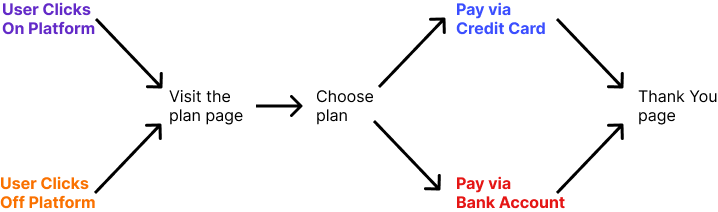
CopiedWhat do journalistic investigation, dating, sales, and hiring have in common? Each of them are funnels towards insight, partner, customer, and employee respectively. This same concept can be expanded to value generating outcomes like Conversion, Retention, Ad Click, etc.
A funnel is a series of events or actions that customers need to take leading up to a value generating outcome. You start broadly (Top of the Funnel) and then increasingly narrow down into what you want.
Why it matters: A funnel models reality and exposes steps in the funnel that need to be optimized.
How do you know it is good?
- Funnel conversion rate benchmarks vary based on geographies, product categories, and industries. Always be on the lookout for openly available benchmarks like here and here.
- For ease of analysis, use Segmentation to simplify multi-path funnels into single-path lines.
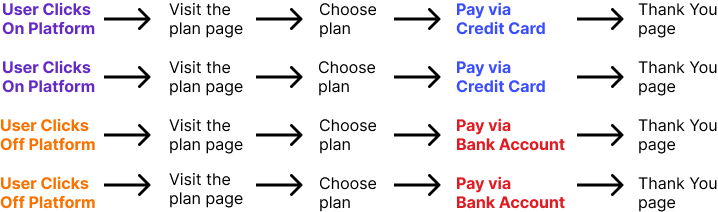
Optimizing funnels:
Actively use A/B Testing or Multi-armed Bandit to optimize your funnels:
- Increase Top of the Funnel but that costs money
- Change the user experience to drop drop-offs
- Use Propensity Modeling to provide Discounts and Promotions, etc. at the right spots
- Drop steps in the funnel much like Amazon’s one-click purchase
Build and maintain an Audience Funnel
CopiedOnboarding helps orchestrate evolving users from one segment to another.
Why it matters: Like all people, customers change over time and go through a Customer Lifecycle. The more a customer learns about your product or service the better they will make use of it and the more advanced their usage will become. Onboarding helps them evolve.
- In Subscription products, it helps users get the most out of their purchase. This in turn, increases retention rates and LTV. The converse is also true. People will churn if you’ve not established a relationship with them. Onboarding can help you activate sleepers — subscribers who pay but don’t use the product.
- For users who have recently installed your Mobile Apps, onboarding can help improve D1 retention.
- Additionally, as users perform actions, you’ll end up collecting First Party Data which in turn ends up cold-starting Personalization.
- Fitness products track and reward usage streaks to increase DAU/MAU and sessions per user.
How
Setup: On sign up or purchase, thank them immediately and offer help to engage further with your product.
- Sometimes this can be a ‘Complete your setup’ wizard with few mandatory steps. Other items, it is a sticky widget that stays until the user completes those steps.
- Typically, you’ll get them to engage with all your Channels: Websites, install Mobile Apps, sign up to Newsletters, subscribe to Push Notifications and even validate email or open a Push Notifications.
- You can also get them sample your features and content across the Information Architecture.
- Celebrate if the user completes all of these steps.

Auto-responder campaign: You also want to run a Newsletters campaign that introduces the user to your mission, introduces your staff, serve them your most popular content, and ask them questions about their motives and interests. This could be as simple as asking them about their favorite local restaurant. The goal is to kickstart a two-way communication.
On-platform nudge users to towards specific actions. For example, ask them to leave their first comment, poll their opinion about topics, after a story ask them what else they they would like us to cover or share tips on what they could have done better. Some platforms like Stack Overflow offer points to encourage usage.
Risk: Beyond this point, you cannot keep bombard or overload the user with everything in one go. Instead, your must progressively narrow down to specific personalized actions, features and topics.
- +1: Encourage your users to share the product with someone else in their Owned Network.
- Invite them to an exclusive event or for a Ask Me Anything with your staff
- Build Transformative work products for them so they can do deeper into certain topics
- Ask them to follow staff on Social
- Constantly communicate to them about the new product features that you are launching for them
How long: You could start off with a fixed period onboarding but ideally you should go on until user graduates to desired engagement level on the Customer Lifecycle.
CopiedRunning push notifications
- Etiquette
- Have a per user day cap, i.e., have a upper limit to the number of push notifications that can be sent to a user per day.
- Measuring performance
- Setup a funnel to track: Push notifications sent, Delivered, Opened, and Clicked.
- Be on the look out for audiences unsubscribing to push notifications or uninstalling your app after receiving push notifications.
What to optimize
- Consistency
- Optimize CTR
- Explainability in stories
- Reading Windows
CopiedThese are audiences whose identity you know. It could be as simple as an email address or phone number. To acquire them, get them to login to your website, download mobile app, or subscribe to your newsletters. For such audiences, you can use personalization to drive up pages per session through smart homepage, newsletters, push notifications, and onboarding.
Why it matters: You should collect their data in a customer data portal and use it improve your engagement, drive subscriptions, relationship with audience, etc.
CopiedSearch Interfaces to give audiences exactly what they want.
CopiedAs per newslifespan.com, there are four types of news topics:
- Short Shelf Life content, like Breaking News
- Long Tail
- Slow Build-Up: Events such as the World Cup and elections exhibit a gradual increase in attention, climaxing at the event’s culmination.
- Decaying Big News: Initially, a major news event captures widespread attention, but public interest gradually wanes over time.
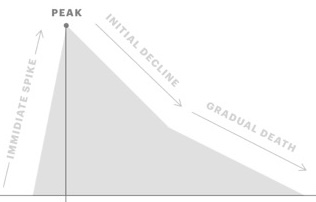
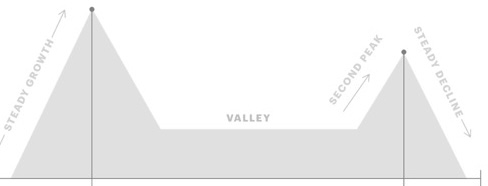
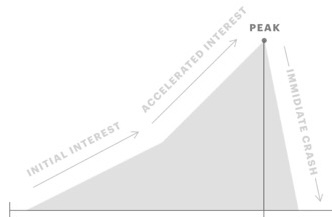 Copied
Affiliate business is a performance-based marketing model where you earn commissions by promoting and driving sales for another company’s products or services.
CopiedYou’ll need to adapt as you implement the subscription revenue model. Subscribers give you time, attention and money. Hence, all your decisions need to answer what’s best for your subscribers!
- On revenue diversity: You’ll need to work on your user experience so subscribers feel well served. Hence, indirect digital advertisements and subscription don’t gel well. To implement digital advertisement in subscription products, you’ve to serve premium advertisements that your audiences will appreciate.
- On owned identity: Once you move to subscription, you cannot claim to remain “the paper of record”. Your editorial judgement will start reflecting the values of your subscribers.
- Who drives and amplifies: Once a simple subscription stack is in place, then the editorial team can directly serve value to the customer! Given that the drivers are the editorial teams and product and engineering can amplify their impact.
CopiedWhy it matters: eCPM for logged-in or on apps is much higher than anonymous users on the browser.
- However, most digital publishers lack First Party Data because they have not invested in getting audiences to login or install their app. Hence, they cannot prove who is coming their platform.
How: You can collect information by converting Anonymous Audience to Identified Audience, running Progressive Disclosure campaigns or simply by asking a post purchase questionnaire. Examples:
- Google knew this and hence gave away Gmail, etc. so people login. Amazon knows this and hence Amazon Prime Video, Audio, etc.
- Media publishers lack Identified Audience and hence systems like Lotame reverse engineer who is the audience statistically from the kind of content they consume
CopiedLike Personalization, even item ranking algorithms are Editorial Products because they demonstrate Editorial Judgment.
Why it matters: One might not have the resources to implement Personalization or might want to start with something simpler. In this situation, use data science or basic machine learning to implement user-agnostic item ranking.
How: You can train different item-ranking models for different use cases (recirculation, conversion), retention and cohorts (logged out, logged in, subscribers). For this, you might want to use datapoints like:
– Pageviews
– Reading Time = Avg. Time On Page x Page-views
– Topic rank
– Time decay
– Subscriptions|Subscription Conversion|conversions and renewals
– Age of the article
Future potential: Currently, most item ranking models run at a Posts level. A better approach would be to have models that run at phrase or sentence level, allowing for inline linking.
CopiedProgressive Disclosure campaigns help build up First Party Data which in turn helps you build Personas, Segmentation, and Target advertisements.
CopiedUse text similarity solutions like Lucene or Topic Modeling algorithms like Top2Vec or BERT to find related stories.
CopiedWe write one article for everyone. However, in real life, would you tell a story to a close friend, an office colleague, and a child in the same way? Today, personalization is labeled “For You.” In the future, it will be “Written For You.”
Here’s how:
- Just as Google Sheets stores formatting separately from information, editorial teams will have to Separate information from formats.
- Let LLMs (Large Language Models) rewrite them for each user.
 Copied
All subscription content products should have this feature! If the user has already paid for the service, then simple UI hacks like this demonstrate that we care for the user’s time.
 Copied
Sampling involves trying out different things until you find what works, namely, what meets all predefined criteria for success.
CopiedLikely Factors
Twitter understands what is important based on if the content is about a big handle and if the topic in the content is being spoken about by big handles.
Observations
It seems that Twitter has implemented a rule on top of its recommendation algorithm. It’s common to see a retweet or reply to a specific tweet, let’s call it ‘Tweet X,’ in your feed, followed shortly by the original ‘Tweet X.’
- This pattern suggests that ‘Tweet X’ is surfaced through the personalization algorithm, while the retweet or reply is introduced by a set of rules.
- These rules likely operate under the assumption that if you are interested in ‘Tweet X,’ you would also be interested in related content.”
CopiedI recently saw a subscription-based product use this phrasing for their Customer Dependency Index survey: ‘How would you feel if the product was not available from tomorrow?’
The Product Manager must have thought: ‘Let me gather these responses to demonstrate to stakeholder how dependent our users are on our product.’
Meanwhile, the customer thinks: ‘Hey there! I’ve already paid for an entire year. What are you implying? Shouldn’t I be able to rely on your service?’
CopiedThere are three types of audiences:
- The first type is your owned network. These are individuals you know personally, who will respond to your messages and answer your phone calls. Adding people on LinkedIn or Facebook does not mean they are part of your network.
- The second type is audiences to your owned media. This group includes people whose email addresses you have, those who subscribe to your WhatsApp channel, or follow you on social media. Essentially, when you reach out to them, there’s a chance they will read your message. Your audience invests their time in you, which equates to their attention.
- Finally, the most valuable type of audience is a community. A community represents the highest form of audience engagement because people actively choose to meet and interact with others through your owned media. This community not only invests time but also contributes effort. They gather on your platform, giving you the opportunity to bring together the right individuals in a meaningful way. You can encourage them to share insights, experiences, challenges, and predictions they might not disclose in public settings.
- Recently, I was at a closed-door, invite-only meeting of CTOs at Microsoft where they had employed Chatham House Rules which means you use what is discussed but not quote who said it. Microsoft has the power to convene and drive open conversations.
A common mistake is to leap from an owned network to a community without first cultivating an audience. In most successful scenarios, there is a natural progression: network leads to audience, which then evolves into a community.
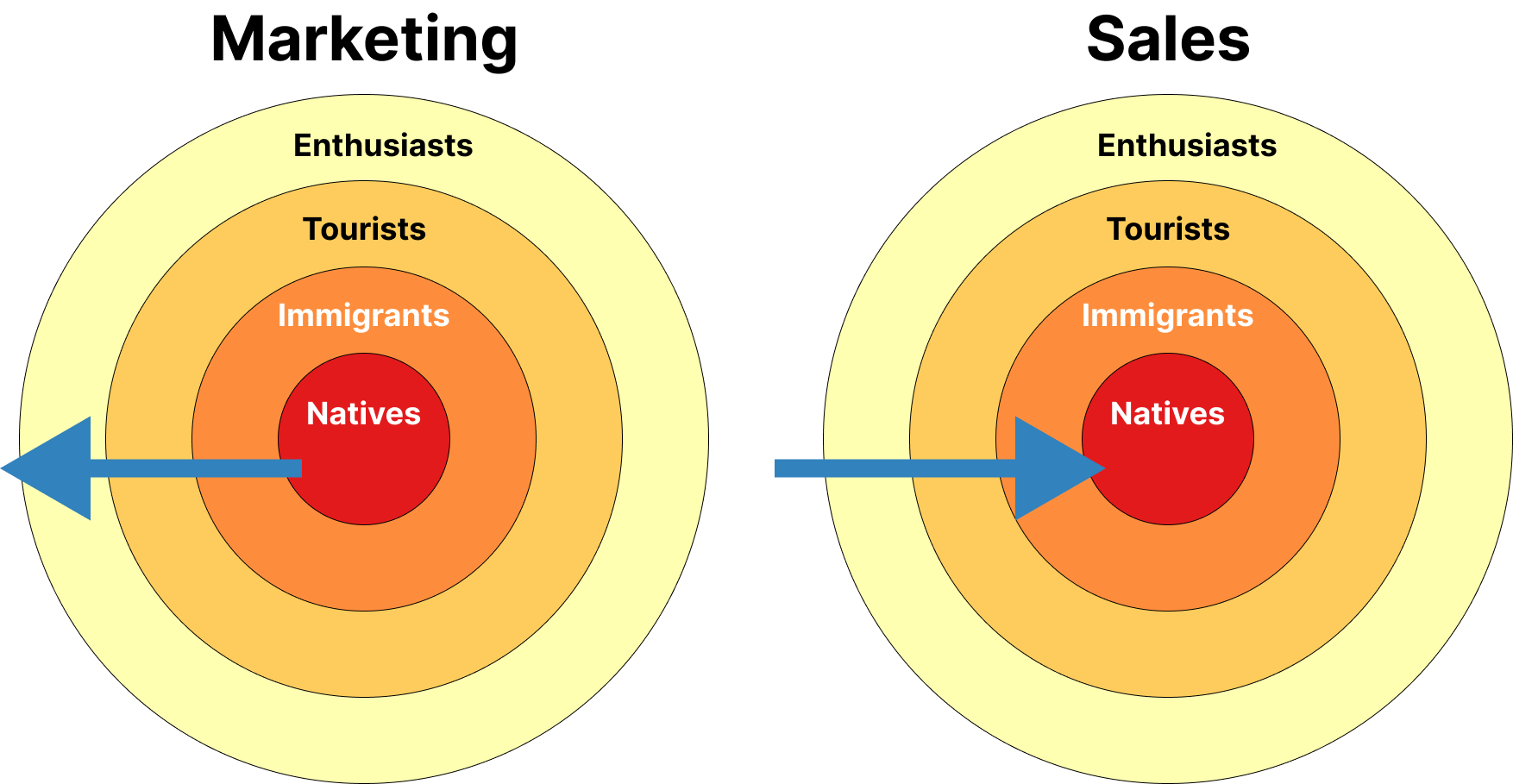
CopiedThe best online content is written by nerds (natives) in a topic for nerds (natives) in the same topic. Most of us are silent bystanders — Immigrants, Tourists, Enthusiasts — who observe these two groups conversing on the nuances of the topic of interest.
Most marketing is about increasing the surface area by expanding your reach outward. In contrast, most sales are about bringing outsiders in.
For example, Apple used to be a company that sold $2000 laptops. Then Steve Jobs launched iTunes for Windows, a free music management software that everyone could download. This was followed by the iPod, a $100 device. Slowly but steadily, everyone could try, taste, and understand the value proposition of Apple and move inward from enthusiast to tourist to immigrant, until they eventually became natives.
 Copied
Watch a child learn, and you’ll notice that most aspects of their development are information problems.
- Information: What is an 🍎? We need to teach children to call it an ‘apple’.
- Ability: How to draw with a ✏️? We need to teach children to hold a pencil and draw straight lines.
- Action: Should one eat 🥦 or 🍕? We need to persuade kids to build an appreciation for the former.
- Belief: Should one steal? We need to help children build a perspective about what’s good or bad.
CopiedStrategizing content based on audience preferences isn’t sustainable because you’ll end up building an inauthentic identity. Instead, the content you create should reflect the life you live. It should articulate your experiences and insights.
Go pick a field where you have deep leverage — skill, judgment, network, location, culture, etc., or you have deep interest and thus are willing to jump into it fully.
Just do great things and talk about it. But for that, you first need to start building rigor for documentation and writing.
CopiedBrian Chesky’s comments in his interview with Lenny paraphrased: In most situations, engineering and marketing operate in different universes. Marketing focus on either performance marketing (tactic) or brand marketing (too strategic). When both work closely, you get product marketing, which is an educational tool, informing both internal teams and customers about the unique benefits of what’s being created.
- This involves various strategies such as demonstrations, storytelling through video content, and considering every customer touchpoint to ensure comprehensive understanding.
- The essence of Chesky’s approach is twofold: first, create an outstanding product, and second, ensure that people know about it.
- This involves framing each product release as a chapter in an ongoing story, making it relatable and memorable.
- Such a narrative approach not only captivates the audience but also bridges the gap between the technical brilliance of engineering and the persuasive art of marketing.
Amazon: Similarly, Amazon advocates that product managers start their projects by first writing a press release. This forces them to craft a compelling narrative.
Copied
Users spend 10x to 20x more time on social media compared to the time they spend on news media. Given that, it is recommended to invest in both native (on-platform) and social footprint and sell both as part of direct ads.
- Direct sales. Micro-celebrities can charge brands anywhere from Rs. 30,000 to a lakh for a social media post. Top cricketers charge a couple of crores for a post on their social media handles. This is especially true for videos.
- Subscriptions. Referral traffic from Twitter tends to give much higher subscription conversions compared to traffic from other sources like Facebook.
TV news anchors have a vast following. Do news companies monetize on their social following and do influencer deals?
“a growing trend of advertisers beefing up their influencer marketing budgets, including companies that you wouldn’t typically associate with creators. Next year, spending on influencer marketing in the U.S. is expected to rise nearly 15% to $5.89 billion, according to a forecast from Insider Intelligence.”
“Influencer marketing has been a way to reach customers who don’t know about the company. “The creator economy is huge for that because they’re hitting up people in various stages of the buying cycle,” said Ravichandran. “The person is not ready to buy, but then something will happen … like somebody tried to steal [their] credit card.” When that happens, the individual may remember the creator’s message and subscribe to Aura.”
– Why a Cybersecurity Startup Is Boosting Its Influencer Marketing Budget
Copied
Ad Networks are AI-driven marketplaces owned by BigTech. These AI models are optimized to maximize revenue for the BigTech company. These models keep pushing the boundary of what is the lowest eCPM they can pay out. So if Hindi eCPMs are at Rs. 10, they will keep pushing the floor to Rs. 9.90 across a couple of months.
Hence, it is critical for news publishers to invest in AI to reverse push the boundary of the floor price up until the sell-through drops. By playing on buy and sell, you could see a 25% increase in programmatic revenue. Revenue from advertisements is seasonal. Hence, of course, do this during high-demand months (Oct-Nov-Dec) and play it conservatively from Jan 1.
Copied

Programmatic and direct digital eCPMs are facing significant challenges, especially when it comes to the Hindi market where eCPMs are as low as Rs. 10.
- This scenario becomes even more problematic when considering the revenue distribution model, where ad networks, including giants like Google, claim as much as 50% of the top line.
- Google primarily operates on a performance-based buying mechanism, utilizing cost per click (CPC), whereas media purchases typically hinge on impression-based models (CPM). This dichotomy leads Google to reverse calculate CPC to CPM when making payouts to media, which invariably affects the bottom line.
- Additionally, the situation is compounded by the involvement of Supply-Side Platforms (SSP) and Demand-Side Platforms (DSP), which are in the business of constantly trading ads. These platforms further erode the margins, taking away a significant portion of the revenue in the process.
Based on the discussion within the cohort, we’ve come up with some rough estimates regarding India’s digital advertising market.
- It is valued at approximately Rs. 30,000 crore, which translates to about $4 billion.
- A substantial majority of this market, about 85% or Rs. 25,000 crore, is dominated by digital behemoths Google and Meta.
- In contrast, news publishers in the digital space have a much smaller slice of the pie. Their total digital advertisement revenue potential through direct sales stands at around Rs. 1000 crore, with a more optimistic estimate reaching up to Rs. 2000 crore.
- This estimation aligns with insights from Ashwin Padmanabhan of GroupM.
Changing scenario: With third-party cookie deprecation, Google’s revenue is expected to drop, and so is that of news publishers.
The direct sales pie is degrowing.

 Copied
I co-founded and ran Pykih, a profitable information design studio for five years before folding it. I can say with some authority that Gurman is probably India’s most talented journalist turned information designer! She has now founded ReVisual Labs, her own Information Design Studio. She can help you build competitive differentiation with immersives!
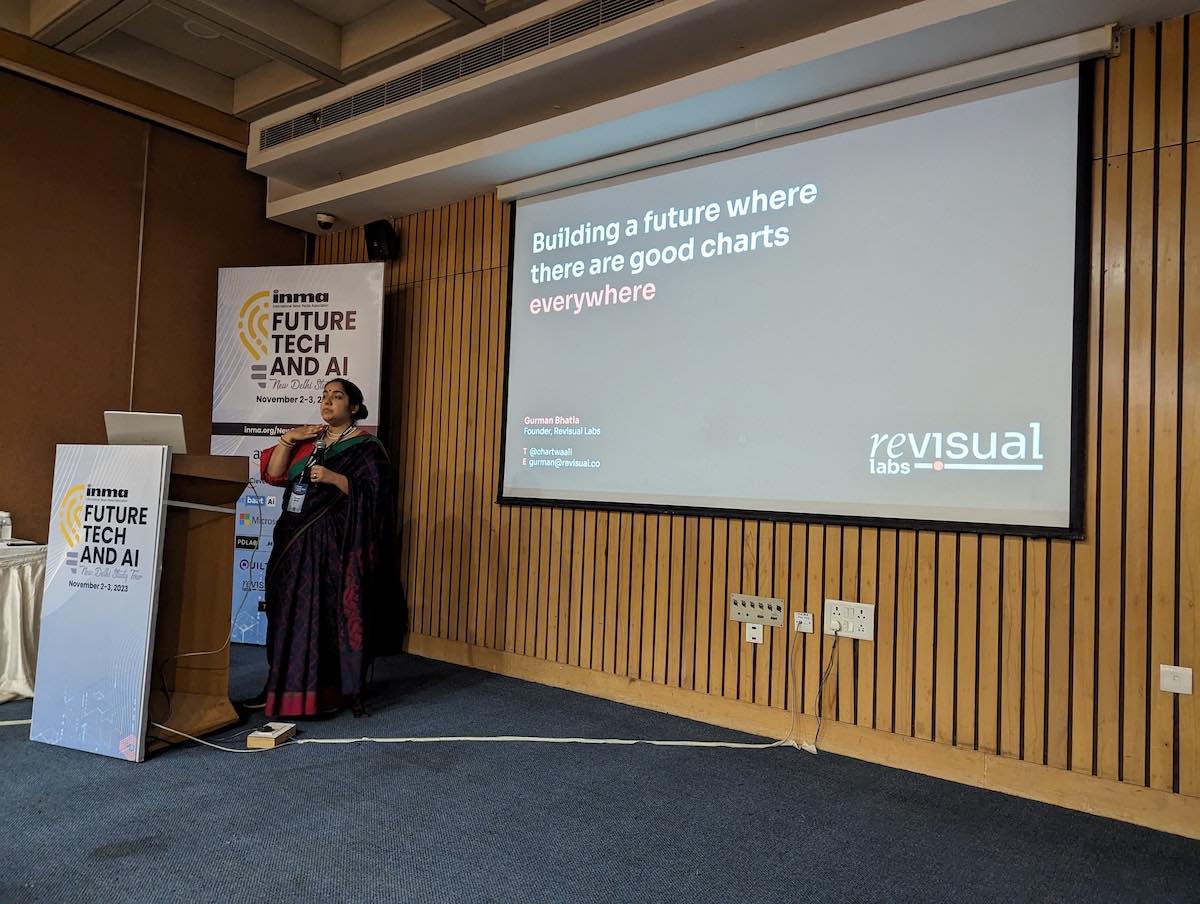

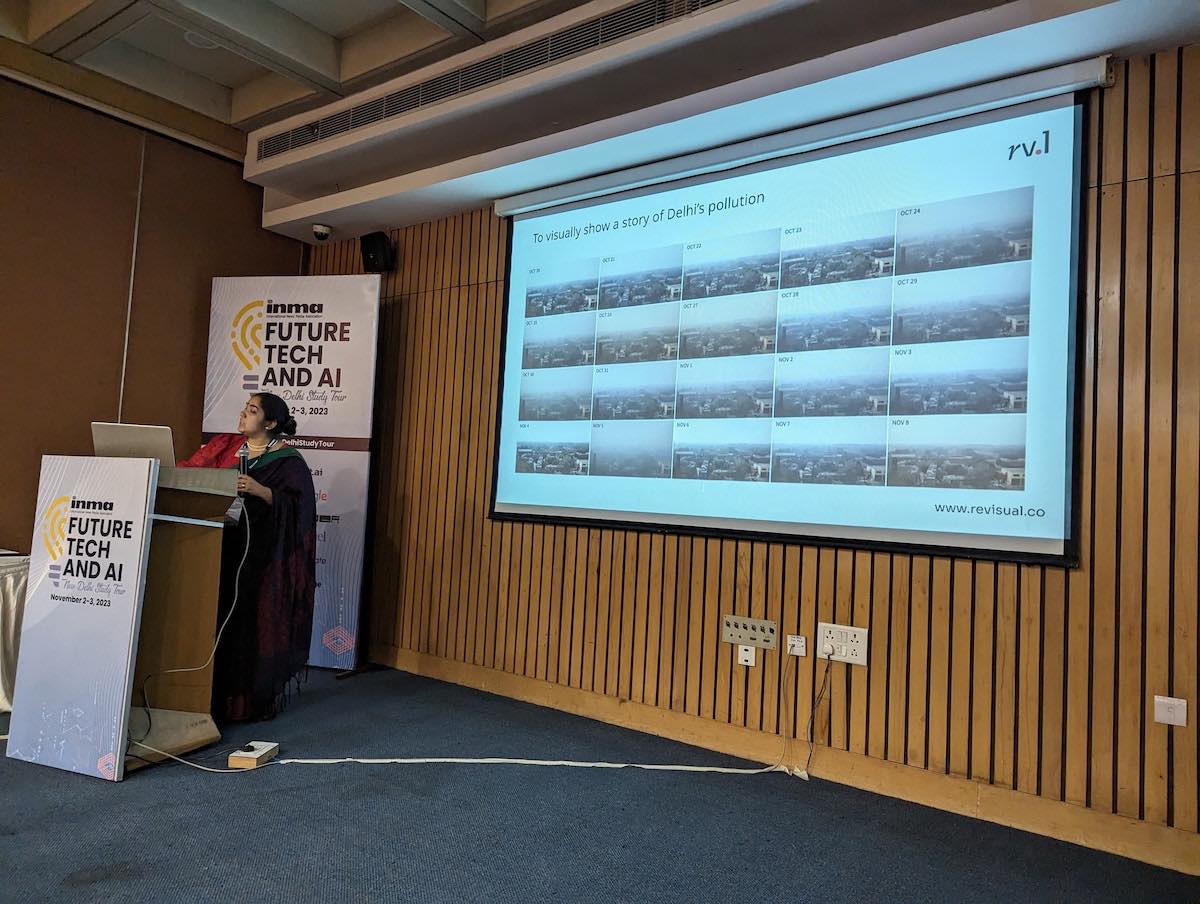

Opportunity: In an industry as commoditized as news, Gurman’s work can help you build competitive differentiation, especially for subscriptions.
- Investing in the creation of long shelf-life visual properties could be a strategic move.
- These properties hold the potential to capture audience attention during High Traffic Events or even foster a habit of daily engagement, thus aiming to enhance daily and monthly active users (DAU/MAU).
- The measure of success in this endeavor is subscription conversions and an uptick in DAU/MAU.
However, this approach is not without its risks.
- You might not be able to prove profit on a per-story basis. Hence, information design might not work for short-term, tactical stories.
- Moreover, integrating immersive stories into your current content management system (CMS) may prove to be complex and problematic.
- It’s also important to consider that immersive stories typically yield little in terms of search engine optimization (SEO) benefits, which can be a significant drawback for online visibility.
Thus, carefully consider if immersives works for your audience and if it does then invest big in it to get that competitive differentiation.
CopiedWhy AI in CMS? In the past few months, integrating Generative AI into CMS has become table stakes! OpenAI’s ChatGPT APIs have made this a variable cost. Hence, we invited two CMSes.
WordPress
I deviate, but I want to spend a bit of time on why WordPress. In the last 10 years, I must have worked on multiple consulting projects to build CMS. Over the years, I’ve built a healthy appreciation for WordPress.
- Unless you have massive scale, there is limited direct financial ROI that newsrooms have to gain from building and investing in custom-built CMS. Some newsrooms are realizing it now. For example, VOX shut down its CMS and migrated to WordPress.
- Newsrooms got distracted building supply-side efficiency technology like CMS instead of revenue-generating advertisement targeting solutions.
Representing the WordPress community was Rahul Bansal from rtCamp. They are one of the sharpest WordPress agencies from Pune.
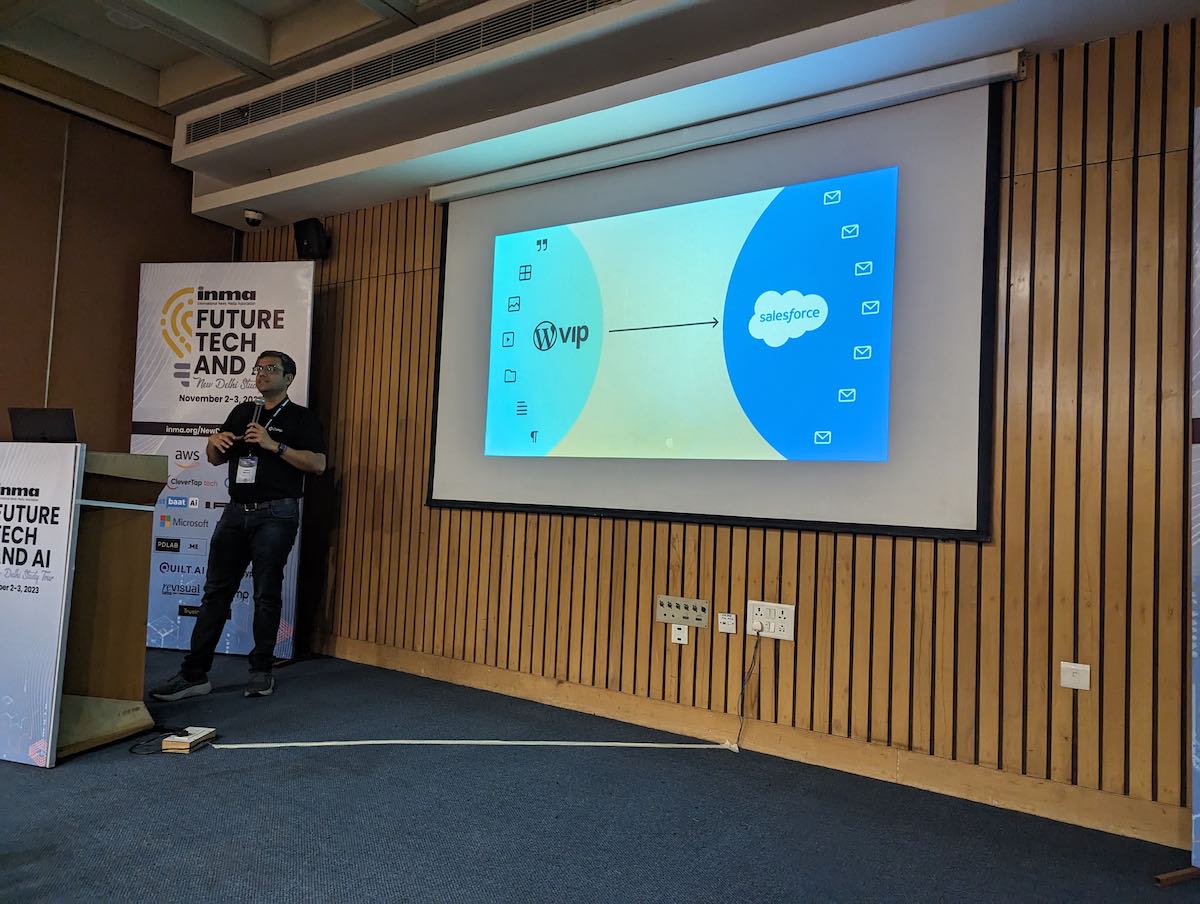
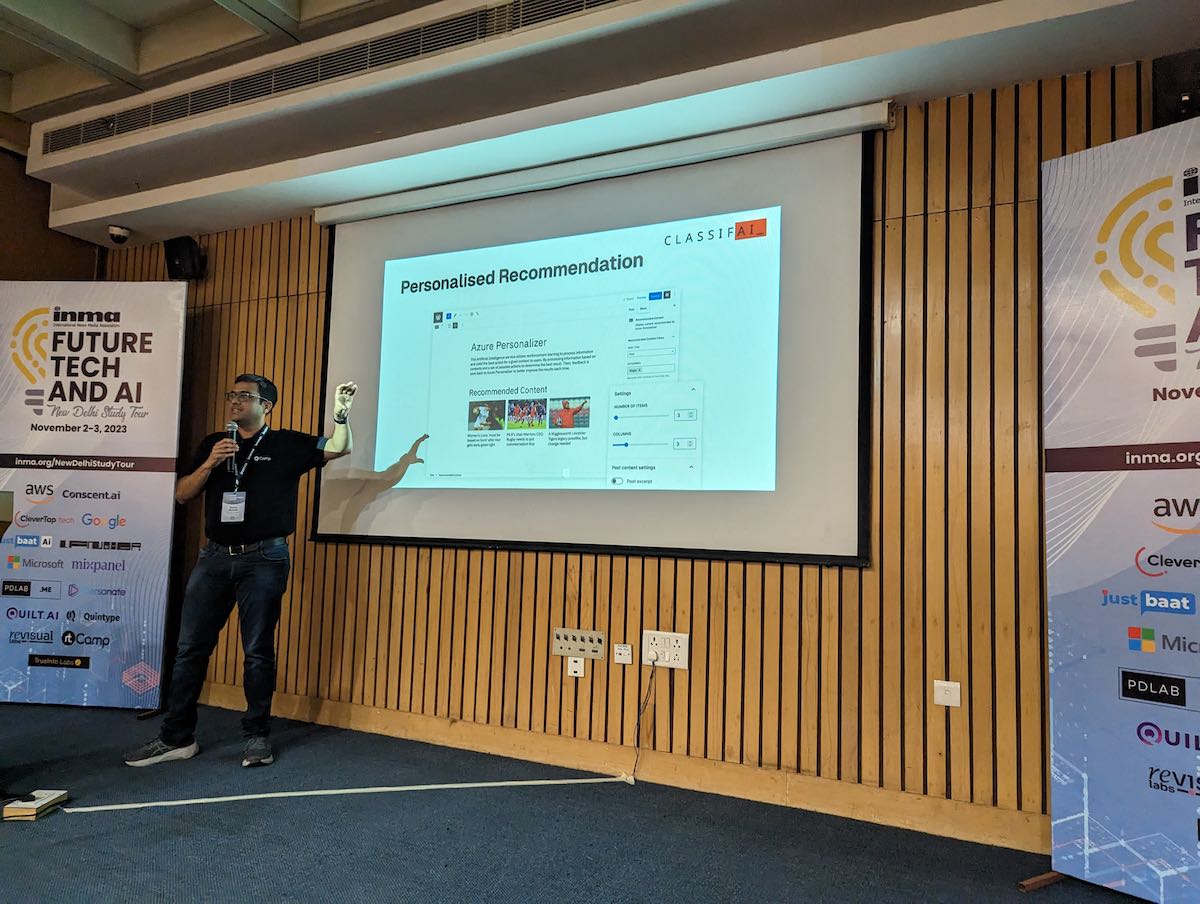
Here’s what Rahul shared:
- WordPress is a Lego-like modular system, and there are plugins for everything.
- Altis DXP provides editorial workflow assistance with ChatGPT.
- RankMath SEO, an Indian company, provides solutions to mass SEO-optimize content using LLMs.
- Elementor GUI plugin provides background removal solutions right inside of WordPress using LLMs.
- WPML integrates with different translation models.
- Akismet provides AI-driven content moderation.
- FalconAI generates outlines of articles using AI.
- etc.
Quintype
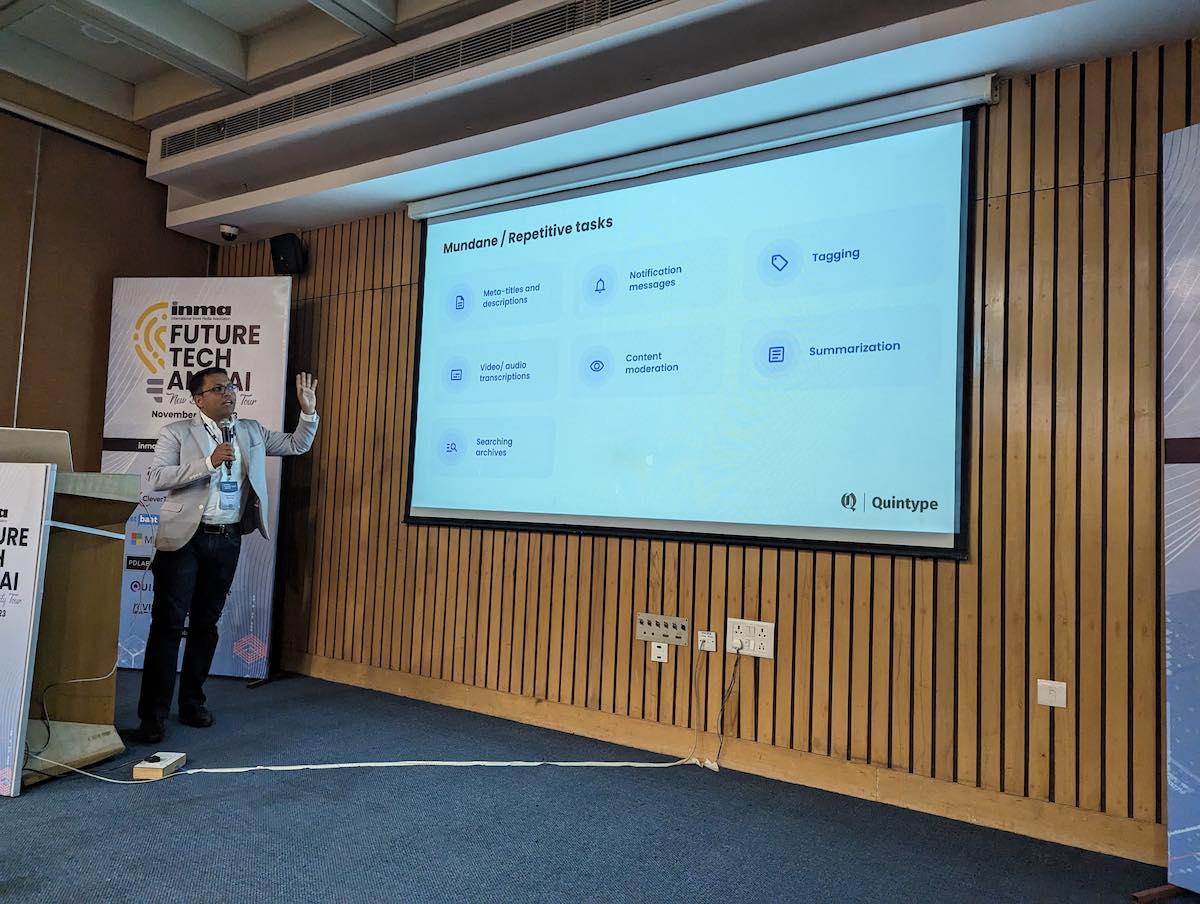
One of the most successful custom-built CMS in the market from India is Quintype. Over 200 publishers across the world use them! Chirdeep Shetty, their CEO, walks us through their AI integrations. According to him, LLMs are best left to the OpenAIs and Googles of the world, and the focus of Quintype is to get the UX right as per the workflow of the newsroom. Instead of me trying to explain what they do, I’d recommend watching the video below.
 Copied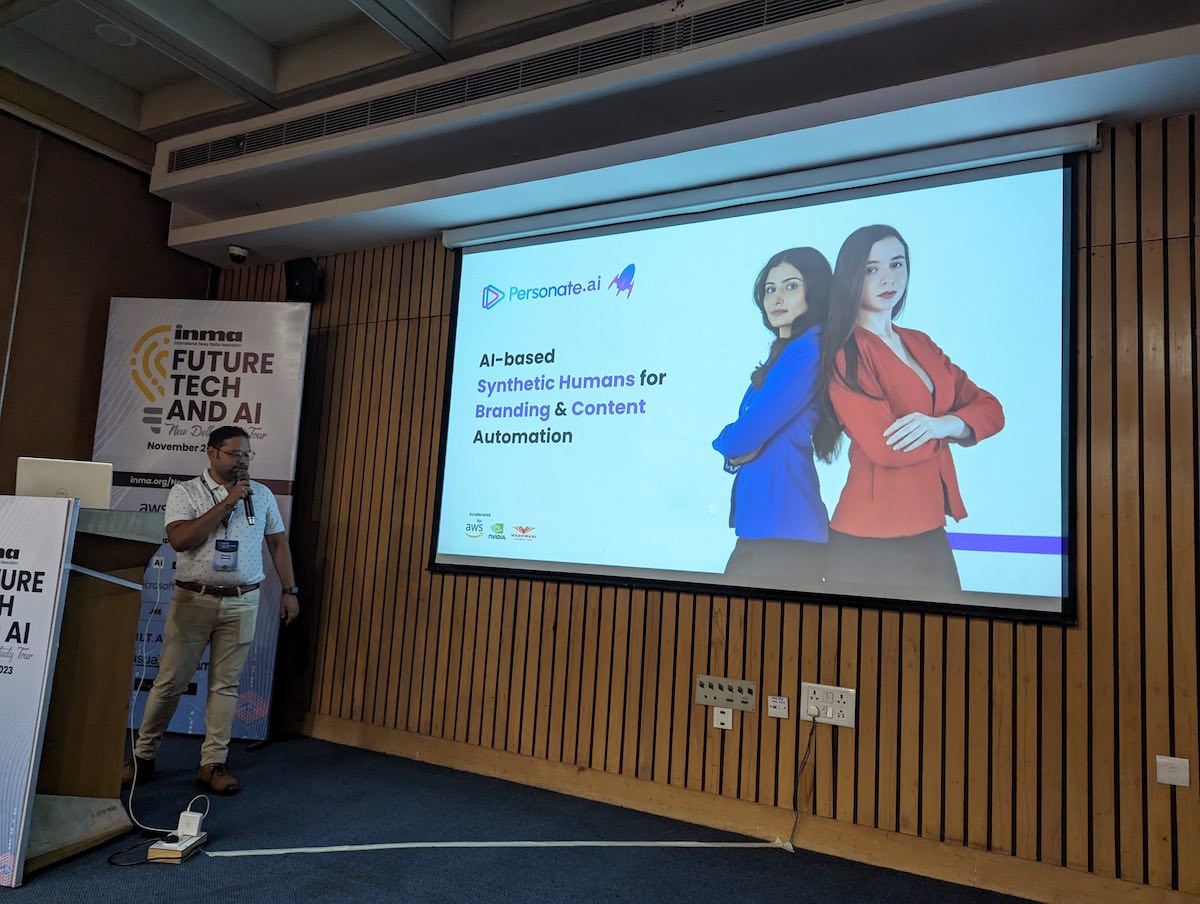
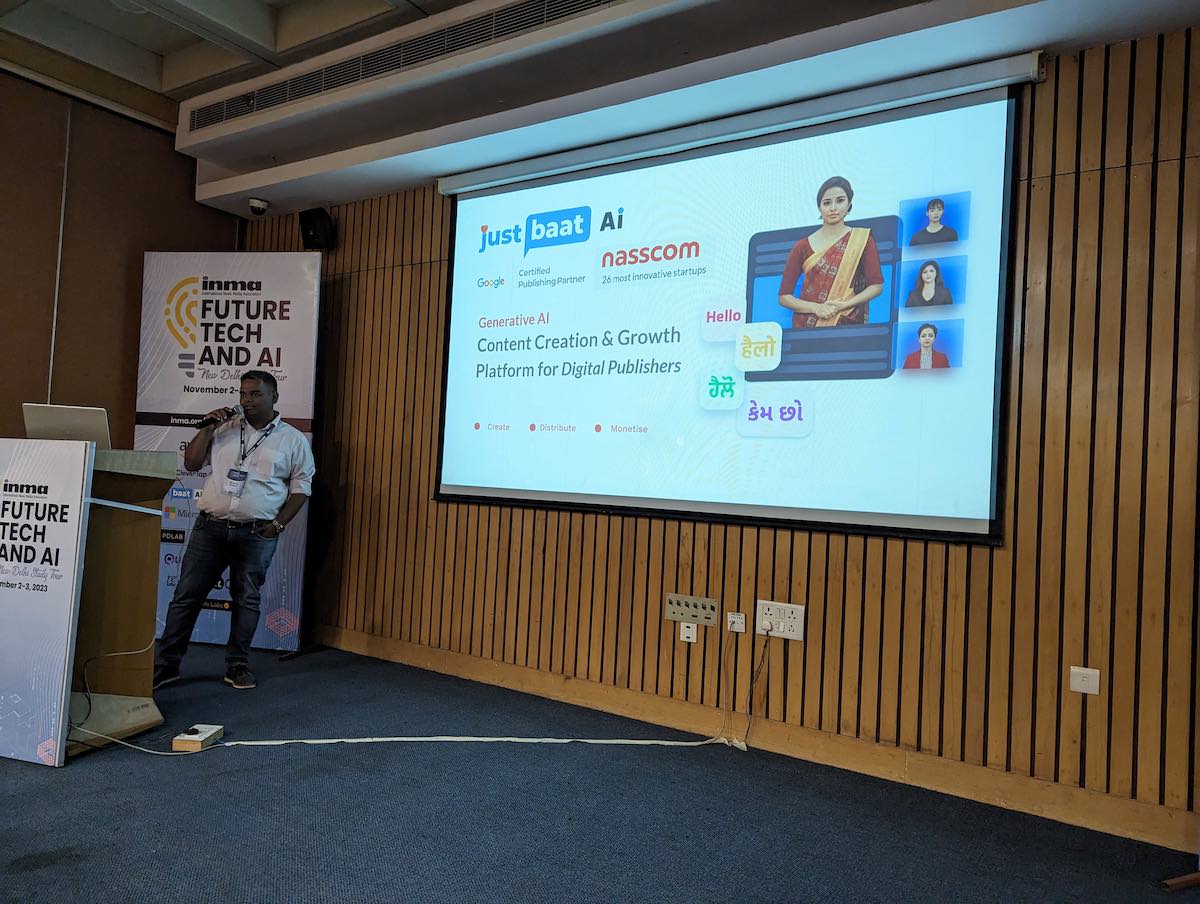
We had two vendors pitch: JustBaat.ai and Personate.ai. My assessment is that if you are not already, then go ahead and try out the technology.
Opportunity exists for those newsrooms that lack the “video DNA”. This technology can help bridge that gap and enable you to create videos at scale. It can also help you break away from the traditional reliance on celebrity anchors.
There is significant earning potential in video content since video eCPMs are higher compared to text. By tapping into video SEO and taking advantage of Google’s audio indexing, one can significantly boost visibility. Moreover, building brand IPs opens up opportunities for sponsorships.
Cost-saving is another critical factor to consider.
- Producing videos, especially at scale, is costly due to expenses such as shooting time, anchor salaries, and editing. This technology can help automate most of this.
- Furthermore, the capability to multi-publish textual stories in video format and to mass-create videos from automated data feeds, like air quality reports, stock market updates, and COVID-19 statistics, allows to drastically increase supply of videos.
However, risks should not be overlooked.
- The current state of the technology leaves much to be desired as the anchors, along with their expressions and gestures, can often appear artificial, though it’s important to note that advancements are being made rapidly.
- There’s a possibility that the content might be perceived as gimmicky if not executed well.
- Another concern is AI-driven marketplaces adjusting: as more publishers begin to use AI to mass-produce video content, there could be an oversupply, which might lead to a significant drop in video eCPMs. Therefore, it’s crucial to keep a close eye on expenditures and earnings from programmatic videos on a weekly basis to stay ahead of the curve.
Personally, I want to get my own synthetic avatar made and experiment deeply with this technology.
CopiedTwitter, under Elon Musk, has made some wise investments to become Compute-Heavy.
- They’ve replaced a manpower-heavy safety team with personalization and community notes (AI-assisted crowd-sourced fact-checking).
- They are forcing users to subscribe. It might not be only for cash. Subscribers end up revealing their identity and get classified as digitally transacting users. Brands pay a premium to advertise to these folks.
- Finally, they’ve killed off the Twitter API, thereby protecting the data inside from being used by LLMs.
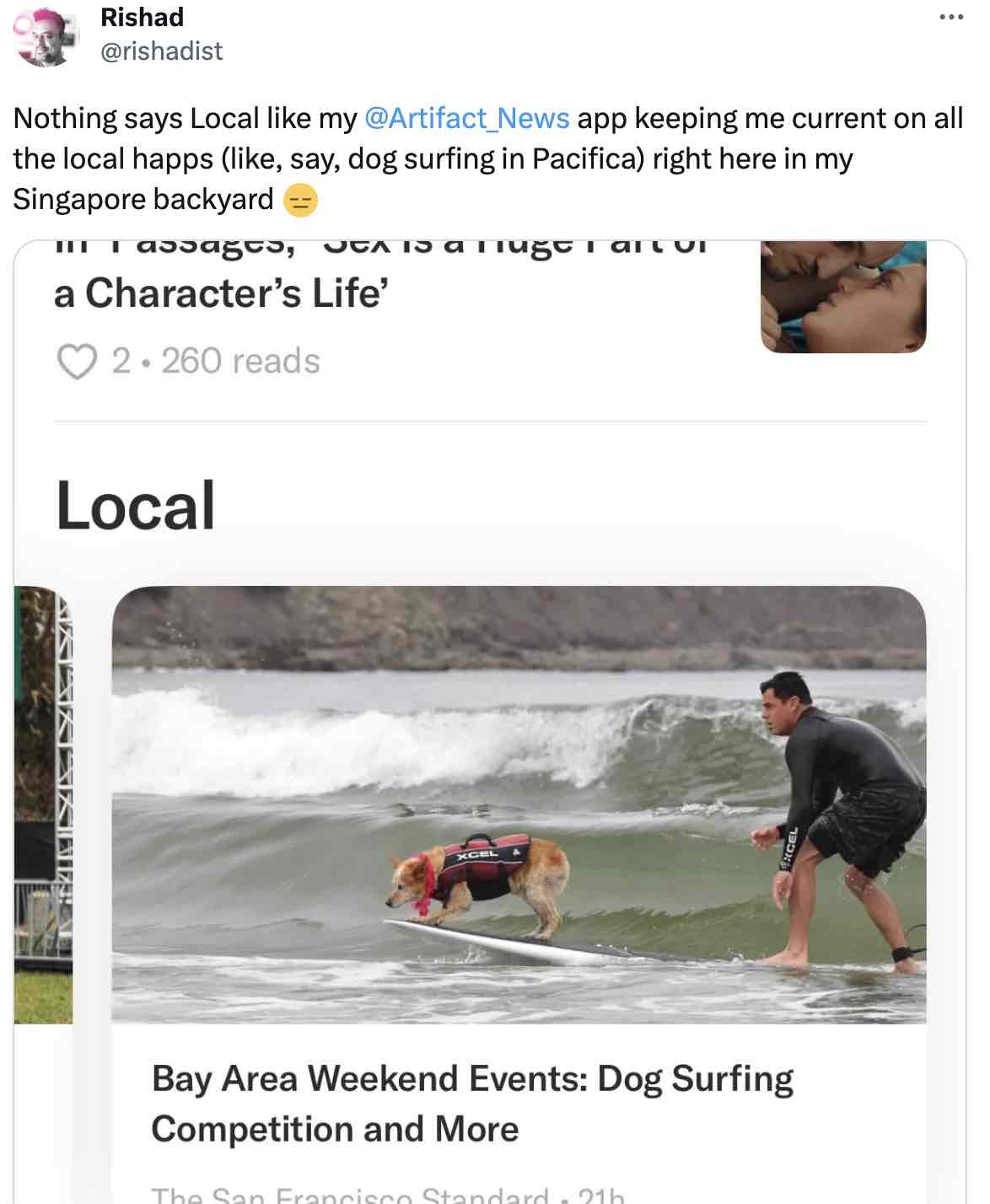
CopiedHandling local news in personalization models can be challenging. For example, one might be living in Delhi but can have family in Mumbai and hence would have interest for Mumbai too.
 Copied
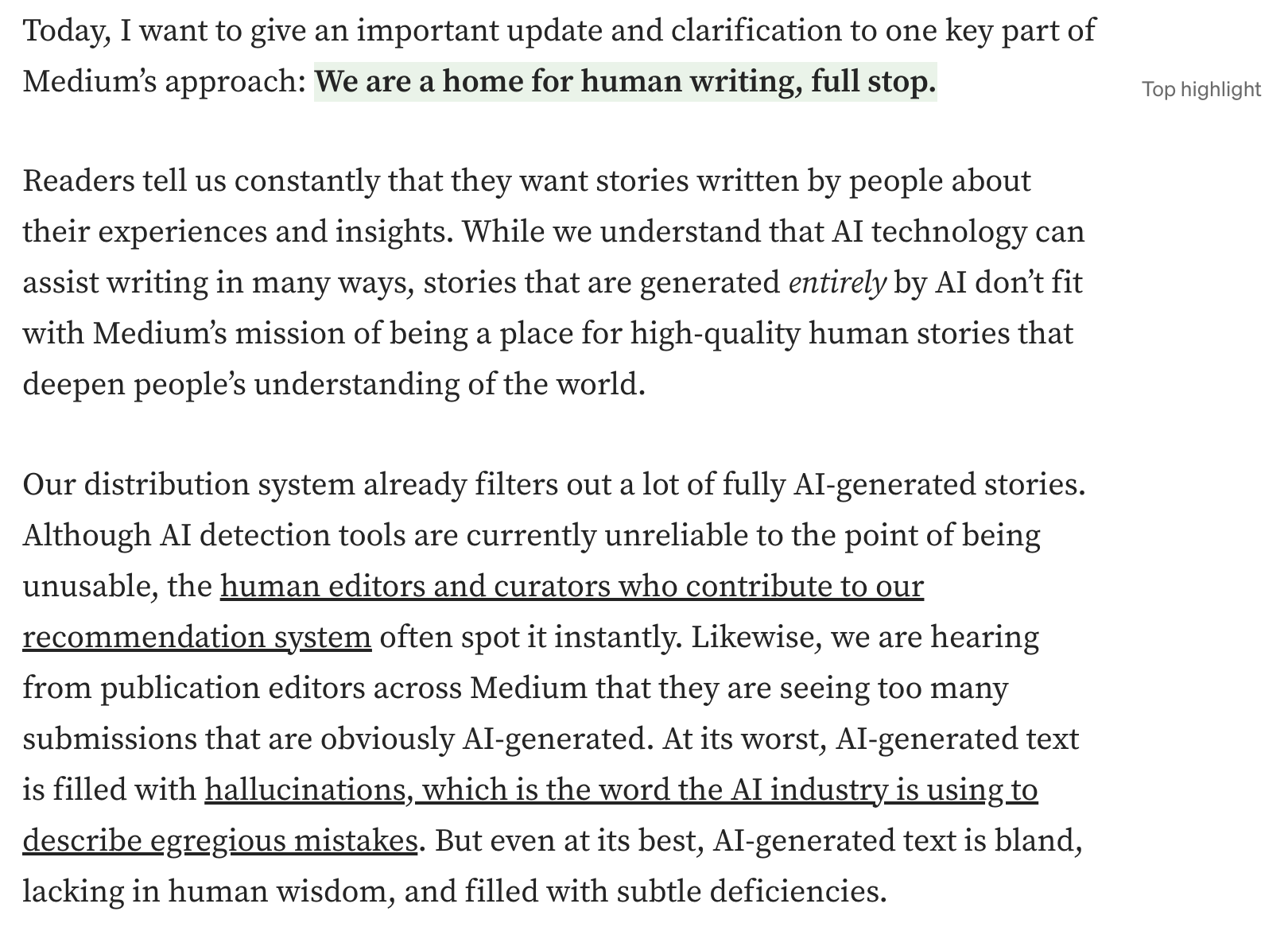
Medium will de-amplify Generative AI generated content from its platform and will actively evolve its personalization system to spot and de-amplify AI written content.
 Copied
Driving factors: Differentiation
Differentiation typically comes from building authenticity on your core product, i.e., editorial product. This involves owning more of the value chain:
Owned Identity: Can you tell your story better than your competitors?
- Are you a trusted brand or voice for a well-defined topic?
- Are you able to set the agenda for a well-defined audience segment?
- How strong is your recall among that well-defined audience segment?
Owned Network: Are you the preferred choice for customers and employees alike?
- Have you stitched the most active members of that audience segment into a tight knit community?
- Is the community co-building with you or via you?
- How are you ensuring that you are not only building but also retaining 1:1 relationship within that community?
Owned Media
- What’s your information architecture and content strategy?
- How deep are you serving that vertical?
- Is your website (yes! a website even after GenerativeAI) representative of who you are?
Amplification factors
While the above gets your driving factors in place, the next aspects define how much you can amplify. This includes:
- Distribution
- Ability to sell advertisements, subscriptions, or events
- Ability to market and develop audience
Copied
Businesses pay top dollar for advertising on Print and TV. However, the same isn’t the case for digital. Here’s why:
We’ve lost access
- Cut: In traditional media, publishers directly sell. Hence, they retain 100% of the topline. In contrast, in digital, publishers sell via AI-driven Ad Networks, and they take a 50% cut from the topline.
- Ability to garner brand premium: All brands want to advertise on a premium Owned Identity, for example, a premium platform like The Times of India newspaper instead of an ad hoc billboard or a blog. Hence, Print and TV command premium rate. In traditional media, premium brand and content is valued. However, when buying advertising from via ad networks, brands cannot say that they want to advertise on a specific website — it goes to the lowest bidder. All content is measured against page view. Hence, a detailed investigation is measured against a cat video.
- Bidding: In traditional media, brands bid up to block out competitors from advertising on premium space. In digital media, publishers bid down to get advertisement.
- Reach: In print and TV, it is assumed that the DAU/MAU is 100%, i.e., the entire circulation (MAU) is reading. Online, one can precisely calculate the DAU, which for most news websites turns out to be only 3-8% of MAU.
Additionally:
- Targeting: Targeting is assumed in newspaper and TV. Most digital publishers have not enforced login struggle to build First Party Data. This makes it impossible to know socio-economic and demographic information about these Anonymous Audience. Hence, businesses pay lesser ad rates if one cannot Target advertisements.
Copied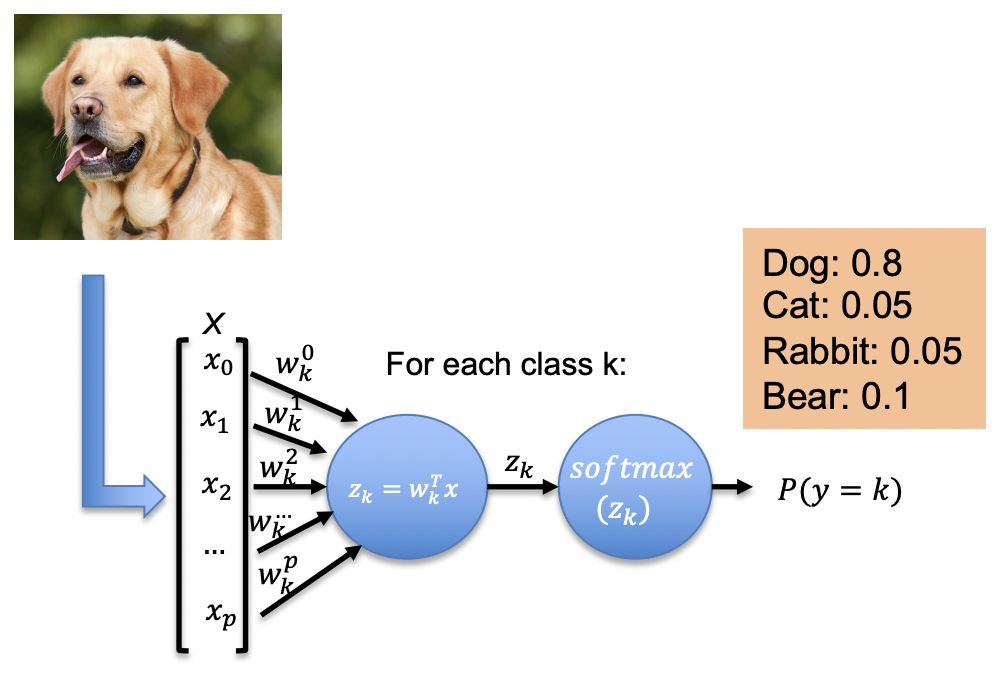
Feature Importance helps you discover which input attributes are contributing the most to the target output.
Why it matters: This helps you ship efficient models that require less investment in
- Data collection, data storage, and data quality evaluation
- Compute
Copied